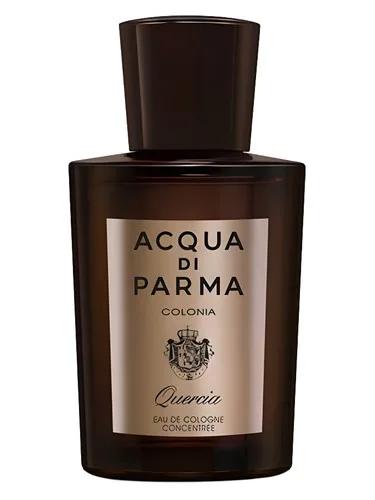
Colonia Quercia
Petitgrain, pink pepper, lemon, and bergamot open Colonia Quercia with the precise, clean Italian freshness Acqua di Parma does better than almost anyone: petitgrain adds a slightly aromatic, green-bitter quality that lifts the citrus above ordinary cologne territory, while pink pepper threads warmth through without dominating.
The scent fingerprint
Weighted by intensity across 13 accords.
Every perfume in Sillage is represented as a distribution across canonical accord slugs — a lingua franca for scent. Two fragrances with overlapping fingerprints are scent-twins, even if they share no literal note.
- Mossy60
- Herbal50
- Aromatic50
- Rose
The note pyramid
- Petitgrain
- Pink Pepper
- Lemon
- Bergamot
- Cedar
- Cardamom
By the editors · 2 min readPetitgrain, pink pepper, lemon, and bergamot open Colonia Quercia with the precise, clean Italian freshness Acqua di Parma does better than almost anyone: petitgrain adds a slightly aromatic, green-bitter quality that lifts the citrus above ordinary cologne territory, while pink pepper threads warmth through without dominating.
Cedar and cardamom form a spare, dry heart. The cardamom is restrained — warm spice rather than kitchen pungency — and cedar keeps everything linear and composed. There's no flowering here; just a direct path toward the base.
Tonka bean, oakmoss, and patchouli form a classic chypre-adjacent foundation. The oakmoss is the signature: earthy, slightly damp, mossy in the way that defines the chypre genre. Patchouli adds depth without sweetness. Colonia Quercia finishes darker than it starts — unhurried, refined.
Scent twins
Factual metadata (name, house, year, notes) is seeded from public datasets. The editorial reading and scent fingerprint are written by Claude against our house style — none of it is scraped prose. Read our methodology.