Diorissimo
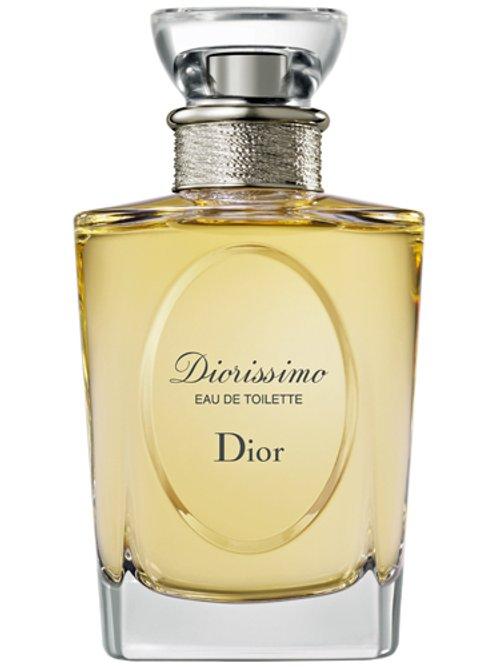
Diorissimo opens with a brief citrus clarity before plunging into its true subject: lily of the valley rendered with near-photographic precision.

The scent fingerprint
Weighted by intensity across 8 accords.
Every perfume in Sillage is represented as a distribution across canonical accord slugs — a lingua franca for scent. Two fragrances with overlapping fingerprints are scent-twins, even if they share no literal note.
- Fresh50
- White Floral50
- Green40
- Woody
The note pyramid
- Bergamot
- Rosemary
- Jasmine
- Lily
- Ylang-Ylang
- Lily of the Valley
By the editors · 2 min readDiorissimo opens with a brief citrus clarity before plunging into its true subject: lily of the valley rendered with near-photographic precision. The green snap of stems crushed underfoot mingles with the flowers' cool, aqueous sweetness—jasmine and ylang-ylang hover at the edges, but they serve only to amplify the muguet's crystalline presence. A thread of rosemary adds an herbal sharpness that keeps the composition from turning cloying.
As it settles, sandalwood provides a pale wooden frame while civet—detectable but restrained in modern formulations—lends bodily warmth and faint animalic shadow. The effect is less garden stroll than captured moment: spring condensed into liquid, worn close to the skin.
This suits those drawn to soliflores with backbone, classical perfumery that prioritizes clarity over complexity. Graceful without being demure, it occupies the space between innocence and knowledge.
Scent twins

Factual metadata (name, house, year, notes) is seeded from public datasets. The editorial reading and scent fingerprint are written by Claude against our house style — none of it is scraped prose. Read our methodology.