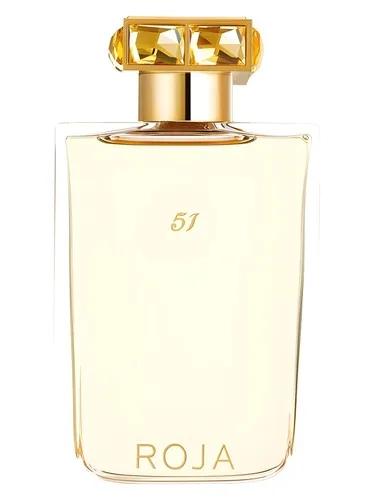
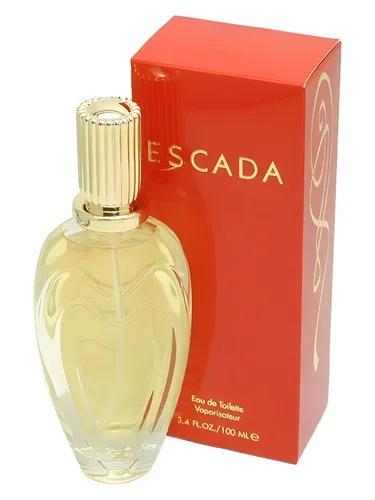
Escada
Escada's namesake fragrance is a monument to early-1990s big-floral ambition: a five-note fruity opening of melon, coconut, peach, lemon, and bergamot that sequences quickly into one of the most densely populated floral hearts of its era — twelve distinct flowers, from tuberose to narcissus, stacked in layers.

The scent fingerprint
Weighted by intensity across 18 accords.
Every perfume in Sillage is represented as a distribution across canonical accord slugs — a lingua franca for scent. Two fragrances with overlapping fingerprints are scent-twins, even if they share no literal note.
- Floral60
- Rose55
- Yellow Floral50
- Tuberose
The note pyramid
- Melon
- Coconut
- Peach
- Lemon
- Bergamot
- Tuberose
- Magnolia
By the editors · 2 min readEscada's namesake fragrance is a monument to early-1990s big-floral ambition: a five-note fruity opening of melon, coconut, peach, lemon, and bergamot that sequences quickly into one of the most densely populated floral hearts of its era — twelve distinct flowers, from tuberose to narcissus, stacked in layers.
The heart doesn't single any one flower out; the effect is more like a florist's whole shop at once. Lily of the valley and freesia contribute green freshness, ylang-ylang and tuberose indolic richness, rose and peony classical depth.
Oakmoss, sandalwood, and amber anchor the dry-down with warm resinous gravity, heliotrope adding powdery sweetness. By modern standards the construction is maximal — even overwhelming. In its own terms it's executed completely: a full-volume signature from an era that believed in them.
Scent twins
Factual metadata (name, house, year, notes) is seeded from public datasets. The editorial reading and scent fingerprint are written by Claude against our house style — none of it is scraped prose. Read our methodology.