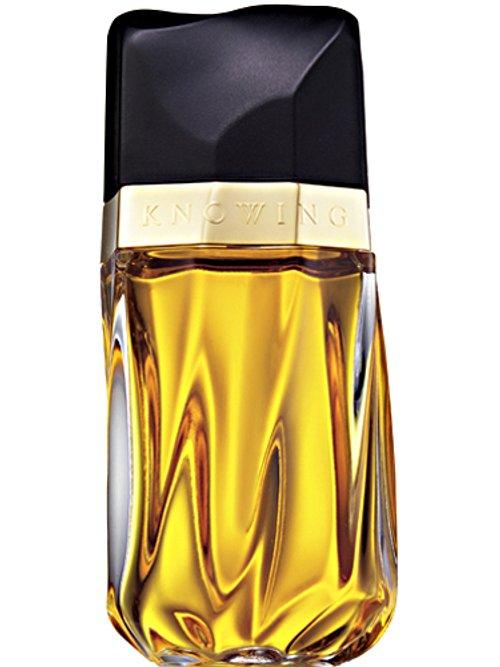
Knowing
Knowing opens with a striking contrast—honeyed tuberose and mimosa pressed against tart melon and plum, a combination that feels deliberate rather than sweet.

The scent fingerprint
Weighted by intensity across 7 accords.
Every perfume in Sillage is represented as a distribution across canonical accord slugs — a lingua franca for scent. Two fragrances with overlapping fingerprints are scent-twins, even if they share no literal note.
- Tuberose80
- Patchouli60
- Amber45
- Rose
The note pyramid
- Melon
- Tuberose
- Plum
- Mimosa
- Rose
- Jasmine
- Lily of the Valley
By the editors · 2 min readKnowing opens with a striking contrast—honeyed tuberose and mimosa pressed against tart melon and plum, a combination that feels deliberate rather than sweet. The florals have weight from the start, hinting at the structure beneath. Within minutes, the heart reveals itself as a proper chypre: jasmine and orange blossom layered over oakmoss and patchouli, with cedar adding a dry, almost austere edge. The spice comes through more as texture than fragrance, a subtle rasp that keeps the flowers from turning soft.
What emerges is uncompromising. The base is dense with sandalwood, vetiver, and a perceptible animalic note from civet that gives the composition its particular tension. This is a fragrance built for boardrooms and evening wear in equal measure, designed when power dressing meant something specific. It wears close but insistent, the kind of scent that demands you grow into it rather than the other way around. Not for those seeking approachability.
Scent twins
Factual metadata (name, house, year, notes) is seeded from public datasets. The editorial reading and scent fingerprint are written by Claude against our house style — none of it is scraped prose. Read our methodology.