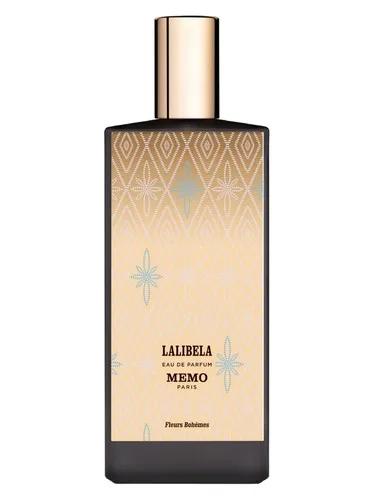
Lalibela
Named for the Ethiopian city of stone-carved churches, Lalibela opens with coconut and peony — an unexpected tropical pairing that reads as ceremonial rather than beachy, the coconut milky rather than sunscreen-sweet.

The scent fingerprint
Weighted by intensity across 14 accords.
Every perfume in Sillage is represented as a distribution across canonical accord slugs — a lingua franca for scent. Two fragrances with overlapping fingerprints are scent-twins, even if they share no literal note.
- Smoky55
- Rose50
- Balsamic50
- Powdery
The note pyramid
- Coconut
- Peony
- Rose
- Jasmine
- Labdanum
- Vanilla
- Patchouli
By the editors · 2 min readNamed for the Ethiopian city of stone-carved churches, Lalibela opens with coconut and peony — an unexpected tropical pairing that reads as ceremonial rather than beachy, the coconut milky rather than sunscreen-sweet. Rose joins early and persists. The heart is where the fragrance earns its geography: labdanum, patchouli, and vanilla together form a dark, resinous warmth that smells of incense-soaked stone — something old and slightly smoky beneath the florals.
The incense base confirms the direction: dry, resinous, deliberately unhurried. Lalibela is a rare thing — a tropical floral treated seriously rather than prettily. The coconut-rose opening could have become a beach fragrance; the labdanum and incense ensure it doesn't. Worth wearing slowly, in contexts that don't require it to be quick.
Scent twins
Factual metadata (name, house, year, notes) is seeded from public datasets. The editorial reading and scent fingerprint are written by Claude against our house style — none of it is scraped prose. Read our methodology.