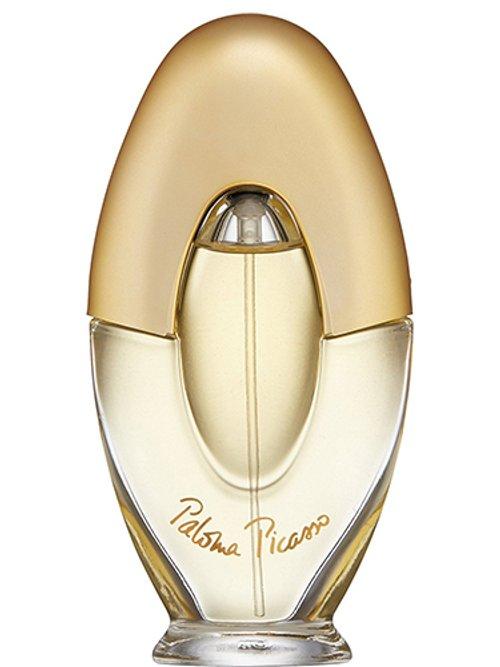
Paloma Picasso Eau de Toilette
The opening strikes a balance between sharp citrus and the faint medicinal coolness of neroli, refusing the sugared brightness that marked many florals of its era.
The scent fingerprint
Weighted by intensity across 12 accords.
Every perfume in Sillage is represented as a distribution across canonical accord slugs — a lingua franca for scent. Two fragrances with overlapping fingerprints are scent-twins, even if they share no literal note.
- Fresh50
- Aromatic50
- Aldehydic50
- Mossy
The note pyramid
- Neroli
- Lemon
- Bergamot
- Jasmine
- Lily of the Valley
- Mimosa
- May Rose
By the editors · 2 min readThe opening strikes a balance between sharp citrus and the faint medicinal coolness of neroli, refusing the sugared brightness that marked many florals of its era. There's an austere quality here, a deliberate restraint that feels more like pressed linen than pastry.
As it settles, the florals emerge—jasmine and rose, yes, but filtered through oakmoss and something animalic that keeps them from floating away into sweetness. The mimosa adds a powdery texture, while civet (likely synthetic by 1984, but still present in spirit) gives the composition a skin-like warmth that borders on confrontational. This is not a polite fragrance.
What remains is a chypre with teeth: woody, mossy, and unapologetically dense. It belongs to an era when women's perfumes were allowed to smell complex, even difficult. Best suited to those who prefer their florals grounded in earth rather than air.
Scent twins

Factual metadata (name, house, year, notes) is seeded from public datasets. The editorial reading and scent fingerprint are written by Claude against our house style — none of it is scraped prose. Read our methodology.