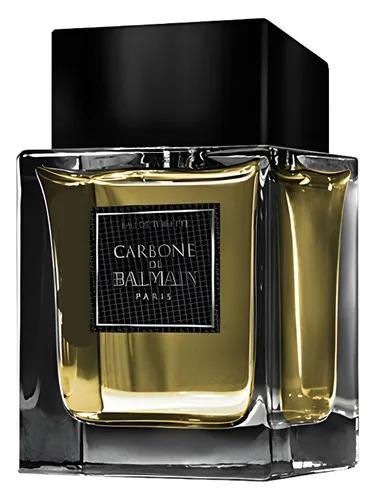
Carbone de Balmain
Carbone de Balmain opens with a sharp, metallic brightness—bergamot and mandarin cut through with something almost industrial, like polished steel catching morning light.
The scent fingerprint
Weighted by intensity across 18 accords.
Every perfume in Sillage is represented as a distribution across canonical accord slugs — a lingua franca for scent. Two fragrances with overlapping fingerprints are scent-twins, even if they share no literal note.
- Aromatic50
- Balsamic50
- Green50
- Fruity
By the editors · 2 min readCarbone de Balmain opens with a sharp, metallic brightness—bergamot and mandarin cut through with something almost industrial, like polished steel catching morning light. The initial citrus fades quickly, making way for a spiced, leathery heart that feels more lived-in than luxurious. There's a smokiness here, but it's restrained, more charcoal sketch than full blaze.
The base settles into woods and musk with a papery quality, suggesting expensive notebooks and architect's offices rather than traditional masculine cologne territory. The leather never dominates; instead, it weaves through the fragrance like a thread rather than a statement piece.
This suits someone who prefers understatement to projection, who values precision over warmth. It's composed, urban, a bit austere—the kind of fragrance that photographs well in black and white. On skin, it stays close, more personal memo than public announcement.
Scent twins
Factual metadata (name, house, year, notes) is seeded from public datasets. The editorial reading and scent fingerprint are written by Claude against our house style — none of it is scraped prose. Read our methodology.