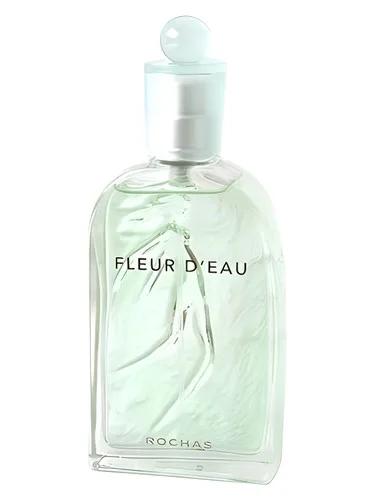
Fleur d'Eau
Fleur d'Eau arrives with a soft melon sweetness that feels more textural than fruity—a watery coolness edged by apricot's fuzzy skin and blackcurrant's tart greenness.
The scent fingerprint
Weighted by intensity across 4 accords.
Every perfume in Sillage is represented as a distribution across canonical accord slugs — a lingua franca for scent. Two fragrances with overlapping fingerprints are scent-twins, even if they share no literal note.
- Amber50
- Rose40
- Ozonic30
- Vanilla
The note pyramid
- Melon
- Black Currant
- Apricot
- Heliotrope
- Lily of the Valley
- Mimosa
- Rose
By the editors · 2 min readFleur d'Eau arrives with a soft melon sweetness that feels more textural than fruity—a watery coolness edged by apricot's fuzzy skin and blackcurrant's tart greenness. This opening has the translucent quality of light filtering through petals submerged in a glass vase, an aesthetic the mid-nineties knew how to render without tipping into candy.
The heart unfolds as a careful study in powdered florals: heliotrope's almond-vanilla marzipan, lily of the valley's crisp greenness, mimosa's talc-soft yellow blooms. Rose adds a touch of classical elegance, but it's measured, not loud. The effect is gentle and somewhat nostalgic, recalling a simpler approach to femininity before fragrance became aggressively niche or unrelentingly sweet.
Sandalwood and amber provide a skin-close finish, while vetiver contributes a whisper of earthiness that keeps the composition from floating away entirely. This is not a perfume that announces itself across a room. It reads as intimate, approachable, suited to someone who prefers quiet sophistication over statement-making.
Scent twins
Factual metadata (name, house, year, notes) is seeded from public datasets. The editorial reading and scent fingerprint are written by Claude against our house style — none of it is scraped prose. Read our methodology.