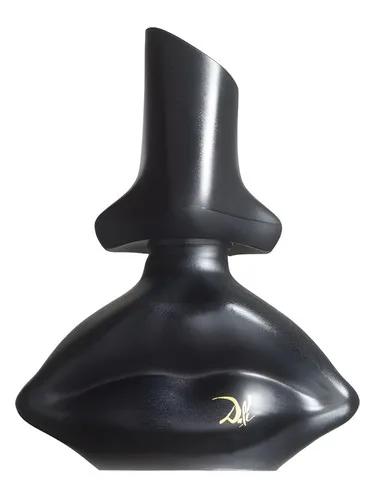
Dali Parfum
The first Salvador Dalí perfume opens with a sharp, resinous incense that feels almost ecclesiastical, tempered by bergamot's brightness.
The scent fingerprint
Weighted by intensity across 15 accords.
Every perfume in Sillage is represented as a distribution across canonical accord slugs — a lingua franca for scent. Two fragrances with overlapping fingerprints are scent-twins, even if they share no literal note.
- Woody75
- Smoky75
- Mossy70
- Rose
The note pyramid
- Incense
- Bergamot
- Jasmine
- Mimosa
- Rose
- Sandalwood
By the editors · 2 min readThe first Salvador Dalí perfume opens with a sharp, resinous incense that feels almost ecclesiastical, tempered by bergamot's brightness. It's an arresting start that announces itself without hesitation, neither subtle nor apologetic in its intensity.
As it settles, a soft floral heart emerges—jasmine and rose anchored by mimosa's powdery, honeyed quality. The flowers never veer sweet or innocent; they remain shadowed by that initial incense, giving the composition a mysterious, old-world formality. The interplay feels deliberate, almost theatrical, which seems fitting given its namesake.
The base is classic eighties architecture: oakmoss and patchouli provide earthy weight, while sandalwood and musk round the edges. It wears close and contemplative rather than loud, suited to someone drawn to fragrances that feel like walking into a quiet library or an antique shop where time moves differently. There's a solemnity here, but also genuine warmth.
Scent twins

In this family
Factual metadata (name, house, year, notes) is seeded from public datasets. The editorial reading and scent fingerprint are written by Claude against our house style — none of it is scraped prose. Read our methodology.