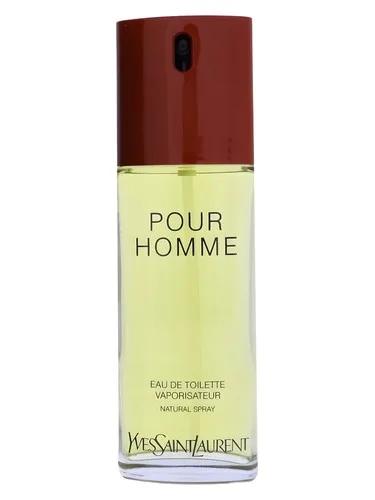
Yves Saint Laurent Pour Homme
A crisp aromatic opening—petitgrain and lavender mingling with citrus—sets the tone for one of the earliest designer masculines to bring French tailoring to men's fragrance.

The scent fingerprint
Weighted by intensity across 12 accords.
Every perfume in Sillage is represented as a distribution across canonical accord slugs — a lingua franca for scent. Two fragrances with overlapping fingerprints are scent-twins, even if they share no literal note.
- Woody75
- Lavender70
- Citrus70
- Earthy
The note pyramid
- Petitgrain
- Lavender
- Lemon
- Bergamot
- Rosemary
- Clary Sage
By the editors · 2 min readA crisp aromatic opening—petitgrain and lavender mingling with citrus—sets the tone for one of the earliest designer masculines to bring French tailoring to men's fragrance. The brightness never turns sharp; there's a restraint here, a composed elegance that wears more like a well-cut shirt than a statement piece.
As it settles, rosemary and clary sage layer in herbaceous depth without overwhelming the citrus framework. The base reveals warm sandalwood and tonka bean rounded by vetiver and musk, creating a soft woody finish that stays close to the skin.
This is classical men's grooming rendered wearable: clean but not clinical, refined without stuffiness. It suits those who prefer understatement to projection, the kind of scent worn by someone who doesn't need fragrance to announce them. More about polish than personality, it holds up as a study in restraint from an era when masculine perfumery was just beginning to define itself.
Scent twins
In this family
Factual metadata (name, house, year, notes) is seeded from public datasets. The editorial reading and scent fingerprint are written by Claude against our house style — none of it is scraped prose. Read our methodology.