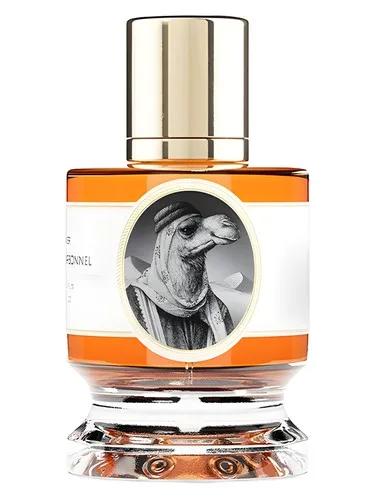
Camel
Camel opens with dusty rose petals stirred into powdery frankincense, like the memory of a souk at dawn rather than the place itself.

The scent fingerprint
Weighted by intensity across 17 accords.
Every perfume in Sillage is represented as a distribution across canonical accord slugs — a lingua franca for scent. Two fragrances with overlapping fingerprints are scent-twins, even if they share no literal note.
- Smoky85
- Musky75
- Amber70
- Rose
The note pyramid
- Olibanum
- Rose
- Cinnamon
- Incense
- Jasmine
- Amber
- Orange Blossom
By the editors · 2 min readCamel opens with dusty rose petals stirred into powdery frankincense, like the memory of a souk at dawn rather than the place itself. There's an immediate warmth, but also restraint—the incense never billows or overwhelms. As it develops, dry spices emerge alongside orange blossom and jasmine, creating a golden haze that feels both inhabited and austere, as though perfume has settled into fabric worn under desert sun.
The base is where Camel earns its name: animalic musk and civet anchor the florals and resins, grounding sweetness with skin and sweat. Sandalwood and vetiver add structure without freshness, while vanilla and tonka soften the edges just enough. What results is less an exotic postcard than a portrait of endurance—perfume as something carried close, warmed by the body, made quietly intimate by time and heat. It suits those drawn to fragrances that feel lived-in rather than applied.
Scent twins
Factual metadata (name, house, year, notes) is seeded from public datasets. The editorial reading and scent fingerprint are written by Claude against our house style — none of it is scraped prose. Read our methodology.