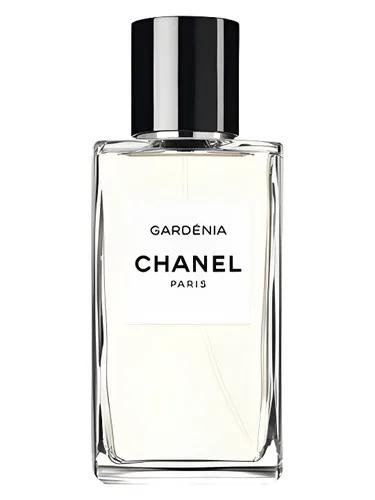
Gardenia
One of Chanel's earliest-surviving white florals, Gardenia never quite smells like gardenia — the flower is nearly impossible to capture directly — but invents something gardenia-adjacent through orange blossom, tuberose, and jasmine working in concert.

The scent fingerprint
Weighted by intensity across 17 accords.
Every perfume in Sillage is represented as a distribution across canonical accord slugs — a lingua franca for scent. Two fragrances with overlapping fingerprints are scent-twins, even if they share no literal note.
- Tuberose60
- White Floral50
- Woody50
- Lactonic
The note pyramid
- Orange Blossom
- Gardenia
- Tuberose
- Jasmine
- Sandalwood
- Coconut
By the editors · 2 min readOne of Chanel's earliest-surviving white florals, Gardenia never quite smells like gardenia — the flower is nearly impossible to capture directly — but invents something gardenia-adjacent through orange blossom, tuberose, and jasmine working in concert. The opening is luminous: a clean floral glow from the orange blossom before the white florals unfurl in the heart. Tuberose pushes forward with purpose; jasmine lends depth without going dark.
The base is what marks it as classical: sandalwood, vetiver, patchouli, vanilla, and coconut in a combination that reads as warm-powdery-milky all at once. There is an oakiness to the drydown that anchors the florals firmly in time — this is unambiguously a fragrance of its era, unsentimental about that fact, and worth knowing on its own terms.
Scent twins
Factual metadata (name, house, year, notes) is seeded from public datasets. The editorial reading and scent fingerprint are written by Claude against our house style — none of it is scraped prose. Read our methodology.