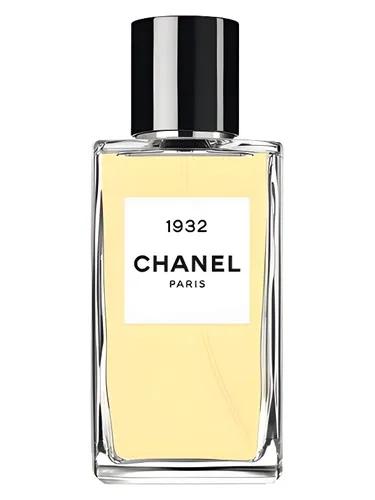
Les Exclusifs de Chanel 1932
**1932** opens with a shimmer of aldehydes and citrus—neroli and bergamot lifting briefly before the white florals take hold.

The scent fingerprint
Weighted by intensity across 15 accords.
Every perfume in Sillage is represented as a distribution across canonical accord slugs — a lingua franca for scent. Two fragrances with overlapping fingerprints are scent-twins, even if they share no literal note.
- Floral75
- Smoky70
- Woody65
- Rose
The note pyramid
- Neroli
- Bergamot
- Jasmine
- Ylang-Ylang
- Rose
- Sandalwood
By the editors · 2 min read**1932** opens with a shimmer of aldehydes and citrus—neroli and bergamot lifting briefly before the white florals take hold. This is not a demure jasmine; it arrives opulent and slightly soapy, closer to the grand white flowers of mid-century perfumery than to modern translucence. Ylang-ylang adds a creamy, almost narcotic weight, while rose softens the edges without sweetening them.
The base pulls the composition into something cooler and more architectural. Incense threads through sandalwood and vetiver, creating a pale smokiness that tempers the florals' richness. Opoponax lends a subtle resinous warmth, but nothing here feels heavy or overtly oriental. Instead, **1932** settles into a poised, slightly austere elegance—white flowers viewed through a veil of pale woods and soft smoke.
Named for the year Chanel introduced her first high jewelry collection, this is a scent for those drawn to classical white florals but weary of sweetness. It wears close and refined, more suited to quiet confidence than bold entrance.
Scent twins
In this family
Factual metadata (name, house, year, notes) is seeded from public datasets. The editorial reading and scent fingerprint are written by Claude against our house style — none of it is scraped prose. Read our methodology.