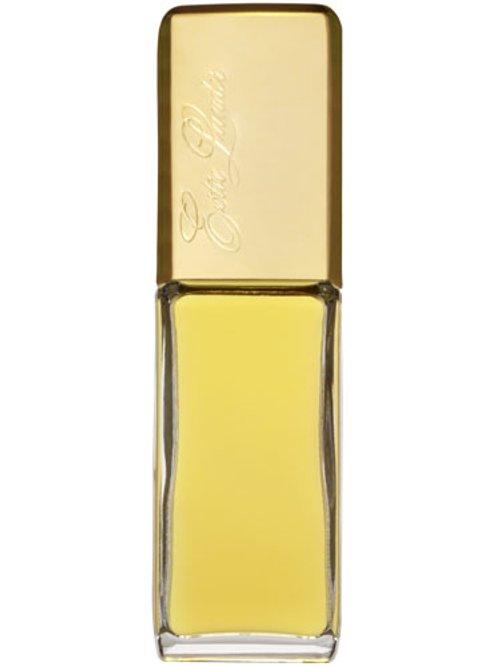
Private Collection
The opening announces itself with bright citrus and orange blossom, but there's a green, almost resinous edge underneath—galbanum lending a sharp, old-fashioned formality.

The scent fingerprint
Weighted by intensity across 4 accords.
Every perfume in Sillage is represented as a distribution across canonical accord slugs — a lingua franca for scent. Two fragrances with overlapping fingerprints are scent-twins, even if they share no literal note.
- Patchouli55
- Rose45
- Amber35
- Iris
The note pyramid
- Orange Blossom
- Lemon
- Bergamot
- Pear
- Jasmine
- Ylang-Ylang
- Narcissus
By the editors · 2 min readThe opening announces itself with bright citrus and orange blossom, but there's a green, almost resinous edge underneath—galbanum lending a sharp, old-fashioned formality. This isn't the sheer florals that would come to define Lauder in later decades. It's substantial, unapologetically dense, belonging to an era when perfume was worn like tailoring.
As it settles, jasmine and ylang-ylang emerge in full voice, honeyed and indolic, cushioned by sandalwood that feels creamy rather than dry. The base holds firm with oakmoss and patchouli, giving the composition a chypre-adjacent backbone that grounds all that white floral richness. There's warmth, but it's restrained—amber and musk stay in supporting roles.
This is a perfume for someone who enjoys presence without spectacle. It recalls boardrooms with Persian rugs, silk blouses, fountain pens. Dated by some standards, but deliberately so, like wearing vintage Hermès.
Scent twins
Factual metadata (name, house, year, notes) is seeded from public datasets. The editorial reading and scent fingerprint are written by Claude against our house style — none of it is scraped prose. Read our methodology.