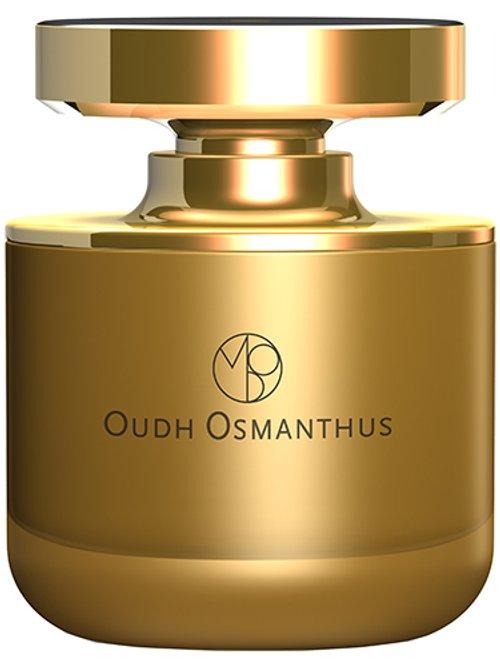
Oudh Osmanthus
The opening presents petitgrain's green-bitter clarity, an unexpected prelude that clears the air before the perfume's deeper intent reveals itself.

The scent fingerprint
Weighted by intensity across 14 accords.
Every perfume in Sillage is represented as a distribution across canonical accord slugs — a lingua franca for scent. Two fragrances with overlapping fingerprints are scent-twins, even if they share no literal note.
- Woody55
- Aromatic50
- Balsamic50
- Floral
The note pyramid
- Petitgrain
- Patchouli
- Osmanthus
- Ambergris
- Atlas Cedar
- Musk
By the editors · 2 min readThe opening presents petitgrain's green-bitter clarity, an unexpected prelude that clears the air before the perfume's deeper intent reveals itself. This is not oud in the heavy, resinous sense—Mona di Orio chose restraint, letting osmanthus carry the composition's suede-and-apricot warmth while patchouli anchors it with earthy weight. The effect is peculiarly tactile, like running your hand along worn leather in autumn light.
As it settles, ambergris and cedar create a soft, mineral haze that hovers close to skin. The osmanthus never shouts; instead, it diffuses through the base notes like sunlight through fog, leaving an impression of something both delicate and enduring.
This is fragrance for those who appreciate complexity expressed quietly—less statement than conversation, unfolding slowly over hours. It suits contemplative moments and people comfortable with perfumes that resist easy categorization.
Scent twins
Factual metadata (name, house, year, notes) is seeded from public datasets. The editorial reading and scent fingerprint are written by Claude against our house style — none of it is scraped prose. Read our methodology.