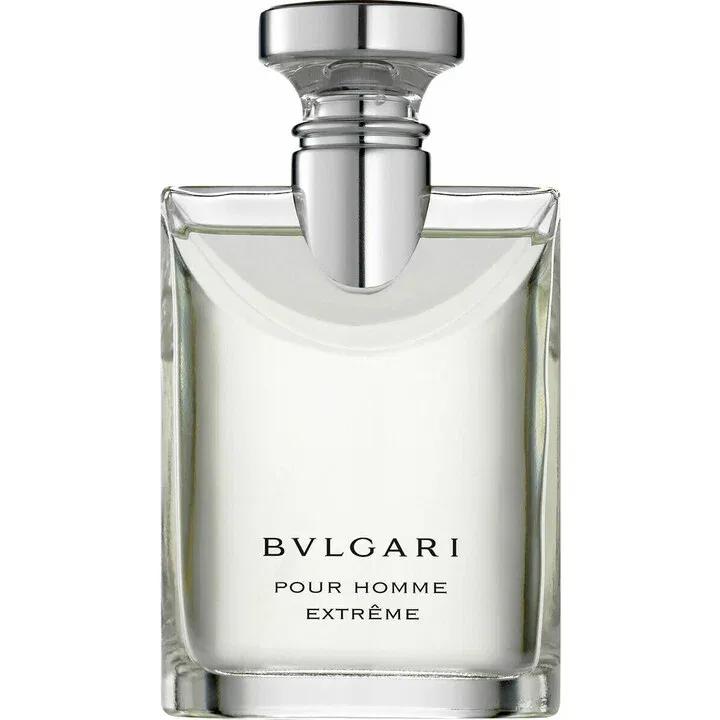
Bvlgari pour Homme Extrême
Jacques Cavallier's 1999 reworking of the original Pour Homme keeps the tea-fougère DNA but darkens it.
The scent fingerprint
Weighted by intensity across 8 accords.
Every perfume in Sillage is represented as a distribution across canonical accord slugs — a lingua franca for scent. Two fragrances with overlapping fingerprints are scent-twins, even if they share no literal note.
- Fresh50
- Soft Spicy50
- Woody50
- Green
The note pyramid
- Petitgrain
- Lavender
- Neroli
- Coriander
- Tea
- Grapefruit
- Galbanum
- Bergamot
By the editors · 2 min readJacques Cavallier's 1999 reworking of the original Pour Homme keeps the tea-fougère DNA but darkens it. The opening is herbal and bright — lavender, neroli, grapefruit, bergamot, with galbanum's bitter green giving it edges — before settling within minutes into a spiced rosewood heart of cardamom and nutmeg.
The drydown is the part that's earned its cult: oakmoss and vetiver carry an iris-musk drift over Virginia cedar and sandalwood, and the whole thing reads polished, faintly austere, slightly old-fashioned in the best sense. Tea is implied rather than literal — the shape is there, the leaf isn't. A go-to office and white-shirt fragrance that wears better in cool weather than in heat, and projects more quietly than its reputation suggests.
Scent twins
Factual metadata (name, house, year, notes) is seeded from public datasets. The editorial reading and scent fingerprint are written by Claude against our house style — none of it is scraped prose. Read our methodology.