Eau des Merveilles
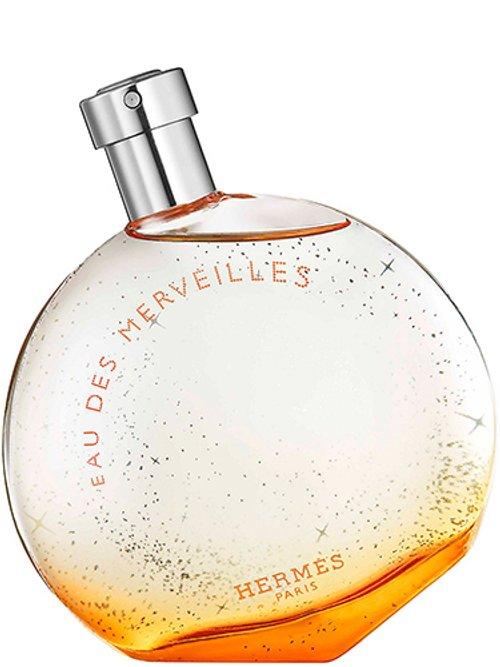
The opening of Eau des Merveilles defies easy categorization—a brief flash of citrus gives way almost immediately to a warm, peppery amber that hovers somewhere between resinous sweetness and clean mineral.


The scent fingerprint
Weighted by intensity across 2 accords.
Every perfume in Sillage is represented as a distribution across canonical accord slugs — a lingua franca for scent. Two fragrances with overlapping fingerprints are scent-twins, even if they share no literal note.
- Amber85
- Vanilla25
The note pyramid
- Orange
- Lemon
- Amber
- Pink Pepper
- Violet
- Oakmoss
By the editors · 2 min readThe opening of Eau des Merveilles defies easy categorization—a brief flash of citrus gives way almost immediately to a warm, peppery amber that hovers somewhere between resinous sweetness and clean mineral. The perfume settles into a peculiar balance: soft violet and pink pepper create an almost salty effect against benzoin's vanilla-tinged warmth, while oakmoss adds a dry, slightly dusty quality that prevents the composition from turning saccharine.
What emerges is neither conventionally feminine nor particularly fruity, despite its name suggesting wonder and the glowing amber bottle. The cedar remains subtle, more textural than aromatic, lending a pale woodiness to the base. This is fragrance as atmosphere rather than story—abstract, slightly austere, and oddly comforting in its refusal to announce itself loudly.
Best suited to those who find traditional gourmands cloying but still want something enveloping. It wears close to the skin and rewards patience.
Scent twins
Factual metadata (name, house, year, notes) is seeded from public datasets. The editorial reading and scent fingerprint are written by Claude against our house style — none of it is scraped prose. Read our methodology.