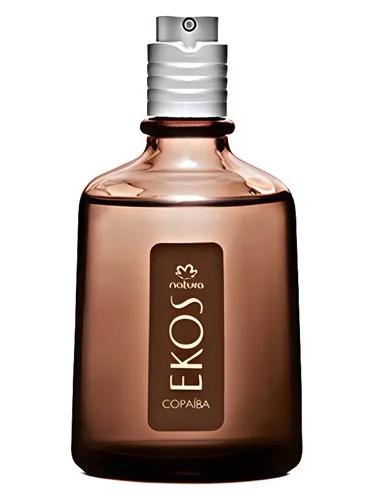
Copaiba
Named for the Copaifera tree — an Amazonian species whose trunk yields a thin, aromatic balsam oil used in both traditional medicine and perfumery.

The scent fingerprint
Weighted by intensity across 11 accords.
Every perfume in Sillage is represented as a distribution across canonical accord slugs — a lingua franca for scent. Two fragrances with overlapping fingerprints are scent-twins, even if they share no literal note.
- Aromatic50
- Warm Spicy50
- Balsamic50
- Woody
The note pyramid
- Clementine
- Elemi
- Lemon
- Bergamot
- Vetiver
- Atlas Cedar
By the editors · 2 min readNamed for the Copaifera tree — an Amazonian species whose trunk yields a thin, aromatic balsam oil used in both traditional medicine and perfumery. Elemi resin and bergamot give the opening a bright, slightly citrus-resinous character; clementine lifts what could otherwise read as a flat wood-citrus accord.
Atlas cedar and vetiver form a dry, slightly earthy heart before the base opens onto copaiba balsam itself — the note that justifies the name, adding a woody-resinous depth that sits between labdanum's dark sweetness and sandalwood's creaminess. Leather and labdanum complete the picture. An accessible masculine that earns its Amazonian botanical claim.
Scent twins


Factual metadata (name, house, year, notes) is seeded from public datasets. The editorial reading and scent fingerprint are written by Claude against our house style — none of it is scraped prose. Read our methodology.